Fertilizers & Soil
Soil pH Testing for Beginners: Get Garden Soil Right
Learn soil pH testing for beginners, including when to test, ideal vegetable-garden pH, and how to raise or lower pH without guessing.
Learn soil pH testing for beginners, including when to test, ideal vegetable-garden pH, and how to raise or lower pH without guessing.
Soil pH testing for beginners sounds more technical than it is. You are not doing chemistry for fun. You are trying to answer one practical question: is your soil in a range where plants can actually use the nutrients already there? If the answer is no, fertilizer alone will not save the season.
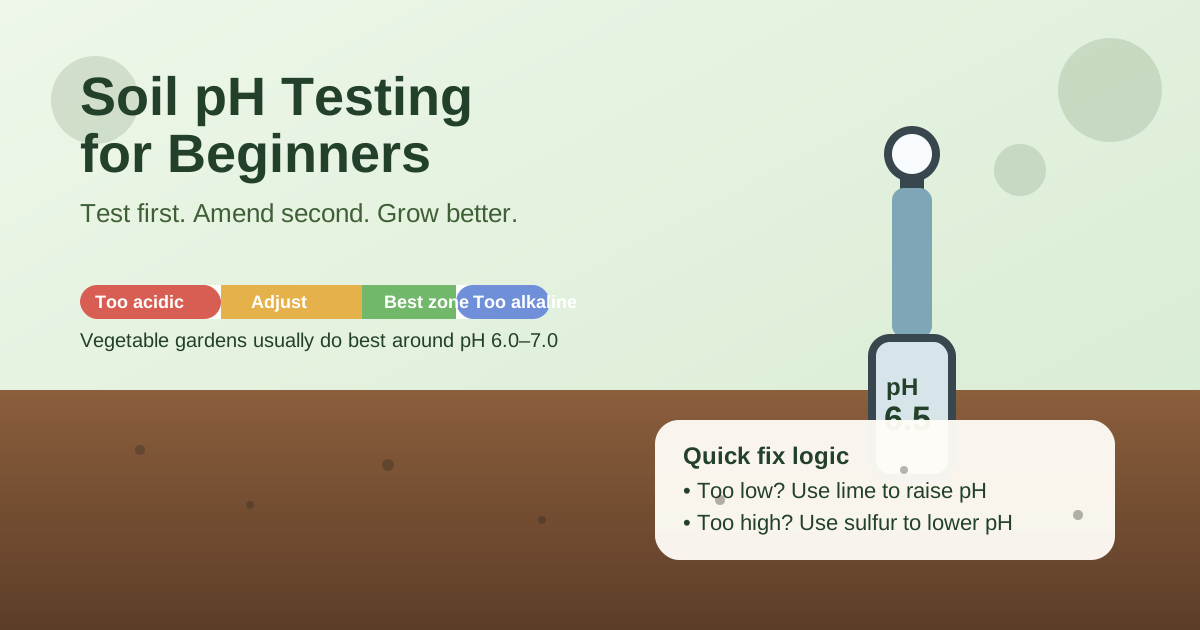
That matters most in spring, right when people are building raised beds, refreshing containers, or planting their first vegetables. Most vegetables do best in slightly acidic to near-neutral soil, roughly pH 6.0 to 7.0. Extension guidance from Oregon State and Penn State both lands in that range, which is a good reminder that this is not niche advice — it is basic garden setup.
If you are feeding plants without understanding the soil underneath, start with our plain-English guide to NPK fertilizer explained. Fertility and pH work together, not separately.
What Soil pH Actually Means
Soil pH measures how acidic or alkaline your soil is on a scale from 0 to 14.
- Below 7 = acidic
- 7 = neutral
- Above 7 = alkaline
The important part is not the number by itself. The important part is what that number does to nutrient availability. When soil drifts too far acidic or too far alkaline, plants can struggle to take up nutrients even if those nutrients are technically present.
That is why a garden can look pale, stunted, or weak even after you fertilize it. The issue may not be that the soil is empty. The issue may be that the pH is blocking access.
What pH Range Most Garden Plants Want
For beginners growing a mix of vegetables, herbs, and common garden crops, this is the useful rule:
- Most vegetables: about pH 6.0 to 7.0
- Most herbs: usually fine in the slightly acidic to neutral range
- Blueberries and other acid lovers: much lower, often around pH 4.5 to 5.5
That means a basic backyard vegetable bed does not need extreme acidity or extreme alkalinity. It wants a pretty moderate middle range.
If you are building a new food garden this season, pair this with our raised bed gardening for beginners guide so you get drainage, layout, and soil depth right at the same time.
When You Should Test Soil pH
The best times to test are:
- Before planting a new bed or garden area
- Before adding lime or sulfur
- When plants are struggling and pests or watering problems do not explain it
- Every year or two if you actively amend your soil
Extension guidance often recommends early spring or late fall testing because it gives you time to act before the main growing push. Fall is ideal for big adjustments because lime and sulfur do not work instantly, but a spring test is still much better than guessing.
If your plants keep looking stressed no matter what you do, read why do my plants keep dying too. pH is one cause, but it is not the only one.
The Three Easiest Ways to Test Soil pH
1. Send a sample to a soil lab
This is the most accurate option and the best one if you are starting a serious vegetable garden, troubleshooting repeated problems, or planning to change pH in a big bed. A lab test usually gives you pH plus nutrient data and recommendations for lime or sulfur.
The downside is speed. You have to collect the sample, mail or drop it off, and wait for the result.
2. Use a home soil pH test kit
This is the most beginner-friendly middle ground. A simple soil pH test meter can help you get a quick read before planting or before you start throwing amendments around. It is not a replacement for a good lab test when the stakes are high, but for small home gardens, it is often enough to catch obvious problems.
3. Use pH test strips or capsule kits
These can work, but they are slightly messier and easier to do badly than a straightforward meter. If you are brand new, a basic test meter or a local extension lab is usually simpler.
How to Take a Better Soil Sample
Bad sampling creates fake precision. If you only test one random scoop from the top inch of soil, the number you get may not represent the bed at all.
A better beginner approach:
- Take several small samples from the same bed or garden area
- Sample from the root zone, not just the dry surface crust
- Mix those samples together in a clean container
- Remove obvious mulch, sticks, and fresh compost chunks
- Test the mixed sample or send that blend to the lab
Treat each growing area as its own zone. Your raised bed, in-ground vegetable patch, and blueberry area may all test differently.
Signs Your Soil pH May Be Off
You cannot diagnose pH perfectly by eye, but these patterns can justify testing:
- Plants stay small even with decent watering
- Leaves yellow or look oddly pale
- Fertilizer seems to do nothing
- Tomatoes or peppers grow, but weakly
- One bed performs much worse than another with the same crops
Do not confuse this with watering problems. A lot of beginner gardens suffer from inconsistent moisture before they ever suffer from bad pH. If that might be your issue, our garden watering schedule guide will help you separate soil chemistry from basic care mistakes.
How to Raise Soil pH
If your soil is too acidic for what you want to grow, the standard fix is garden lime.
A product like Espoma Garden Lime is the kind of amendment gardeners use to move acidic soil upward. Lime can also add calcium, which is one reason it shows up often in vegetable-garden recommendations.
A few rules matter here:
- Do not apply lime just because somebody on the internet said tomatoes like it
- Use soil-test guidance when possible
- Make changes gradually
- Mix it into the soil if you are preparing a new bed
- Expect the reaction to take time
More is not better. Overshooting creates a different problem.
How to Lower Soil pH
If your soil is too alkaline, gardeners usually use elemental sulfur or a soil acidifier product.
For small home setups, something like Jobe’s Organics Soil Acidifier is a practical option when a soil test shows your pH is too high for the plants you want to grow.
Again, go slowly. Lowering pH is usually not an overnight fix, and the amount needed depends heavily on your soil type. Clay-heavy soil and sandy soil do not respond the same way.
This matters especially if you are planting acid-loving crops, but most beginner vegetable gardens are more likely to need small corrections than dramatic ones.
Raised Beds and Containers: Do You Still Need to Test?
Yes, sometimes.
Raised beds and containers give you more control, but they do not magically make pH irrelevant. Bagged soil mixes, compost-heavy blends, and repeated fertilizer use can still shift things over time.
For containers, pH problems are often easier to correct because the volume of soil is smaller. But containers also swing faster if you keep adding products without a reason. If you are mixing your own potting setup, our guide to the best soil for potted plants is the right companion piece.
The Best Beginner Strategy
If you want the simple version, do this:
- Test before making major changes
- Aim for roughly pH 6.0 to 7.0 for a general vegetable garden
- Use a quick home meter for screening, and a lab test when accuracy matters more
- Use lime to raise pH and sulfur/acidifier to lower pH
- Change pH gradually, then retest
That is enough to avoid one of the most common beginner mistakes: treating every weak plant like it needs more fertilizer, when the soil may just be out of range.
Related Reads
- What Is NPK Fertilizer? A Simple Explanation — understand the nutrients pH helps unlock
- Raised Bed Gardening for Beginners — build a productive garden bed from the start
- Best Soil for Potted Plants — choose a better mix for containers and indoor growing
This post contains affiliate links. If you buy through our links, we may earn a commission at no cost to you. We only recommend products we’d genuinely use.
Keep reading
Related guides

Natural Pest Control: Keep Bugs Off Your Plants Without Chemicals
Organic and natural methods to protect your garden from common pests.

How Much Water Does Your Garden Really Need? A Practical Guide
Stop guessing — here's how to water your outdoor garden correctly.

The Best Fertilizer for Houseplants: What Actually Works
Confused about houseplant fertilizer? Here's what actually works, when to use it, and which products are worth buying.