Fertilizers & Soil
The Best Fertilizer for Houseplants: What Actually Works
Confused about houseplant fertilizer? Here's what actually works, when to use it, and which products are worth buying.

Confused about houseplant fertilizer? Here's what actually works, when to use it, and which products are worth buying.
Fertilizer is one of those topics where beginners either ignore it entirely or overdo it and burn their plants. Neither extreme is great. Here’s a grounded look at what fertilizer actually does, what types work best for houseplants, and when to use them.
Why Houseplants Need Fertilizer at All
When plants grow in the ground, their roots access a constantly replenishing supply of nutrients — organic matter breaks down, microbes help make nutrients available, and rain cycles them through the soil.
In a pot, none of that happens. The plant has access to only what’s in that small volume of soil, and every watering leaches some nutrients away. Fresh potting mix contains enough nutrients to last a few months, but after that, you need to supplement.
Fertilizer replaces what the plant uses and what watering washes away. Without it, houseplants become slow, pale, and stunted.
What the Numbers Mean (N-P-K)
Every fertilizer label shows three numbers separated by hyphens — something like 20-20-20 or 3-1-2. These represent the percentage of nitrogen (N), phosphorus (P), and potassium (K) in the formula.
- Nitrogen (N): Promotes leafy green growth. Most important for foliage plants.
- Phosphorus (P): Supports root development and flowering.
- Potassium (K): Overall plant health, stress resistance, disease resistance.
For most houseplants — particularly foliage plants like pothos, philodendrons, and ferns — a balanced fertilizer (equal NPK) or one slightly higher in nitrogen works well. Flowering plants benefit from a bit more phosphorus.
Best Types of Fertilizer for Houseplants
Liquid Fertilizer (Most Recommended)
Liquid fertilizers are the easiest to control. You dilute them in water and apply when you water — simple, even coverage, and you can adjust strength easily. They work quickly because nutrients go directly to the roots.
Miracle-Gro Indoor Plant Food is a reliable, widely available option. Their liquid formula is easy to use and well-suited to most common houseplants. Their slow-release granules (Osmocote) are another popular choice for people who want to fertilize less often.
Slow-Release Granules
You mix granules into the soil or sprinkle them on top, and they release nutrients gradually over several months. Lower maintenance — good if you tend to forget. Less precise than liquid, but very forgiving.
Fertilizer Spikes
Pre-measured spikes you push into the soil. Convenient but nutrients distribute unevenly (concentrated near the spike). Fine for low-maintenance situations, but liquid is more effective overall.
When to Fertilize
Fertilize during the active growing season: spring through early fall. Most houseplants slow down significantly in fall and winter and don’t need feeding — fertilizing during dormancy can push weak, leggy growth and build up salts in the soil.
Typical schedule:
- Liquid fertilizer: every 2–4 weeks during spring/summer
- Slow-release granules: every 3–6 months per label instructions
How to Fertilize Without Burning Your Plants
The most common mistake is over-fertilizing, which leads to fertilizer burn — brown, crispy leaf tips and edges caused by salt buildup.
Always dilute liquid fertilizer to half the recommended strength or less, especially for sensitive plants. More is not better. You can always add more; you can’t un-burn a plant.
Water plants before fertilizing if they’re dry. Fertilizing dry soil concentrates the salts and increases burn risk.
Every few months, flush the soil by watering heavily until water runs freely from the drainage hole. This washes out accumulated salt.
Plants That Need Less (or No) Fertilizer
Succulents, cacti, and air plants have low nutrient needs. Over-fertilizing these causes problems. For succulents, fertilize at half strength once or twice in spring only. For air plants, a bromeliad fertilizer at a fraction of the recommended dose a few times a year is sufficient.
What to Buy
For most beginner houseplant growers, here’s a simple approach:
- Miracle-Gro Indoor Plant Food — Liquid, easy to use, works well on a huge range of plants. Start with half the recommended dose.
- Osmocote Smart-Release — If you prefer a set-it-and-forget-it approach, mix these granules into the soil at potting time.
How Can I Spot Early Nutrient Deficiencies Before Leaves Yellow?
Waiting for obvious yellowing means the plant has already been starving for weeks. Look for subtle shifts in growth patterns first. Nitrogen moves around inside a plant, so a shortage shows up in the OLDEST leaves first — they fade to a uniform pale green and are sacrificed to feed new growth, while the newest leaves come in smaller than the foliage below them. Potassium is mobile too, and its shortage marks those same older leaves differently: yellowing or browning that starts at the leaf margins and works inward. Phosphorus shortages show up as purplish tints on older leaves and stalled root expansion. If soil drains cleanly, roots are healthy, and light matches the species’ needs, apply a targeted feed at one-quarter strength. Monitor response over ten to fourteen days by tracking new growth rather than waiting for old leaves to recover — a damaged leaf does not heal, so the honest test is what the plant pushes out next. Feed into soil that is already moist. A dry root ball concentrates the solution against exactly the fine roots least able to take it up.
When Should I Hold Off Feeding New Propagations and Repotted Plants?
Fresh cuttings and recently repotted specimens have recovering root systems. Adding salts to tender tissue triggers immediate stress. Leave water-propagated clones unfed until roots reach at least two inches in length and show visible branching. Once transferred to soil, wait three full weeks before the first application. For plants moved into larger pots, fresh potting mix supplies adequate initial nutrition. Withhold fertilizer for forty-five days to allow roots to establish without competing with sudden nutrient loads. When resuming, start at one-quarter strength, apply only to the soil surface, and avoid direct contact with the crown. Check drainage holes weekly; blocked exits trap mineral-heavy water against roots and accelerate toxicity.
How Does Tap Water Chemistry Alter Fertilizer Absorption?
Household water mineral content directly changes how roots process added nutrients. Hard water deposits calcium and magnesium, which can lock out iron and manganese uptake. If your area uses municipal treatment, chlorine and chloramines may temporarily suppress soil microbes that break down organic compounds. Let tap water sit uncovered for twenty-four hours before mixing with liquid fertilizer to allow volatile chemicals to dissipate. Adjust your feed schedule to match water quality. In regions with very hard water, increase flush frequency to every four weeks and dilute fertilizer further to prevent salt accumulation. Flushing means running plain water through the pot until it drains freely from the bottom for several seconds, which carries accumulated salts out rather than moving them around.
What Are the Application Differences Between Organic and Synthetic Options?
Synthetic formulas deliver immediate, water-soluble nutrients that roots absorb within hours. Organic blends rely on soil microbes to convert raw materials into plant-available forms, creating a slower release. Because microbial breakdown depends on temperature and moisture, organic feeds work best in consistently damp soil kept above sixty degrees Fahrenheit. Apply organic liquid formulas at full label strength every three weeks, or mix powdered kelp and worm castings directly into the top two inches of soil during spring. Synthetic liquids require stricter dilution discipline, because nothing in the soil buffers a concentrate that went in too strong. Measure the water volume before adding concentrate rather than after, and mix only what you intend to pour that day.
How Do I Scale Feed Strength to Match My Home’s Light Levels?
Light intensity dictates photosynthetic rate, which directly controls nutrient processing capacity. Plants near south-facing windows or under full-spectrum grow lights consume fertilizer faster than specimens in dim corners. For high-light placements, maintain standard half-strength feeds every two to three weeks during active growth. Move a plant to lower light, and immediately cut frequency in half or dilute to one-quarter strength. Overfeeding low-light specimens causes rapid salt accumulation because roots cannot metabolize excess compounds. Watch for white crust forming on the soil surface or pot rim as an early warning sign. Feed earlier in the day, while the plant is lit and actively transpiring, rather than leaving a freshly fed root ball to sit wet through the cool dark hours. Adjust concentration before adjusting frequency, so you are only changing one variable at a time and can read what the plant does about it.
The Bottom Line
Fertilizer isn’t complicated once you understand what it does. Use a balanced liquid fertilizer at half strength every few weeks during the growing season, stop in winter, and your plants will reward you with fuller, healthier growth. Don’t overdo it — restraint is a virtue in fertilizing.
Our Top Fertilizer Picks
Schultz All Purpose Liquid Plant Food (10-15-10) ~$6Easy to use — just 7 drops per quart of water. Great all-purpose choice for most houseplants.
Check Price on Amazon →Affiliate link — we may earn a small commission at no cost to you.
Osmocote Smart-Release Plant Food ~$15Slow-release granules that feed for 4-6 months. Perfect if you forget to fertilize regularly.
Check Price on Amazon →Affiliate link — we may earn a small commission at no cost to you.
Keep reading
Related guides
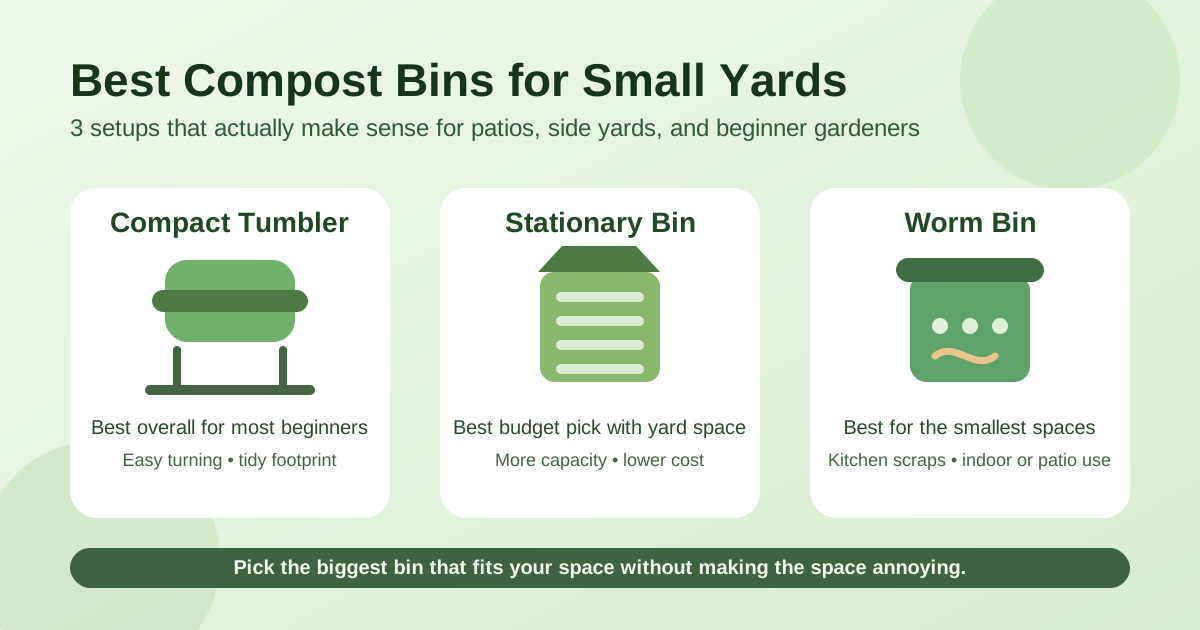
Best Compost Bins for Small Yards and Patios
The best compost bins for small yards and patios make kitchen scraps and yard waste manageable without smells, pests, or a giant footprint.
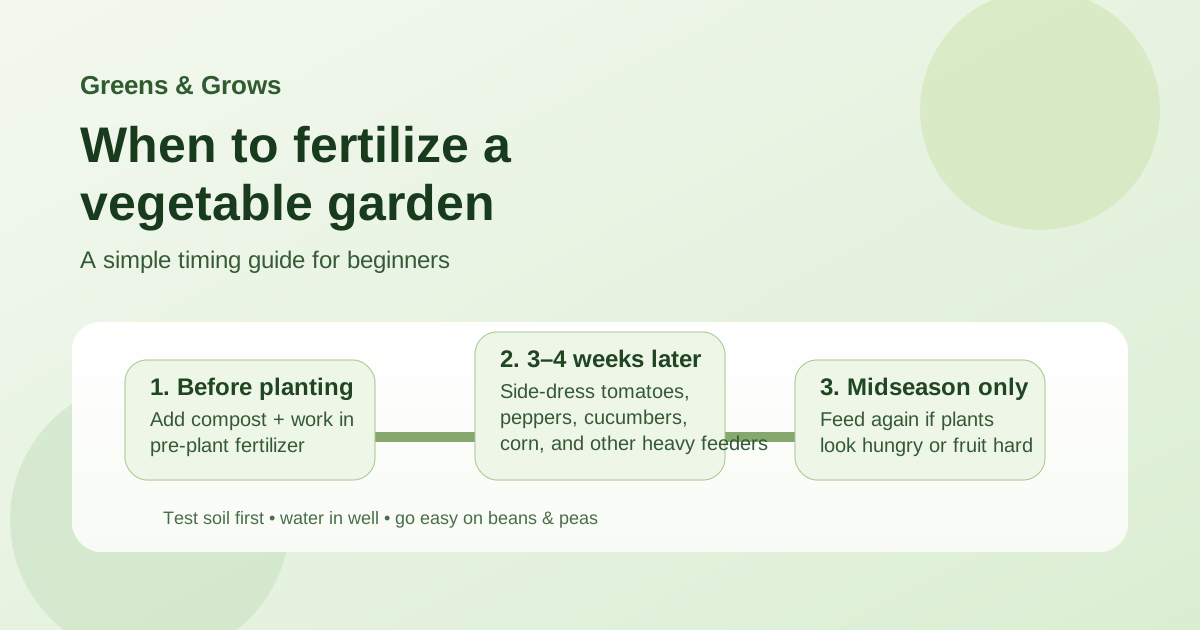
When to Fertilize a Vegetable Garden: Spring Timing Guide
Learn when to fertilize a vegetable garden in spring, after planting, and midseason so you feed vegetables at the right time without overdoing it.
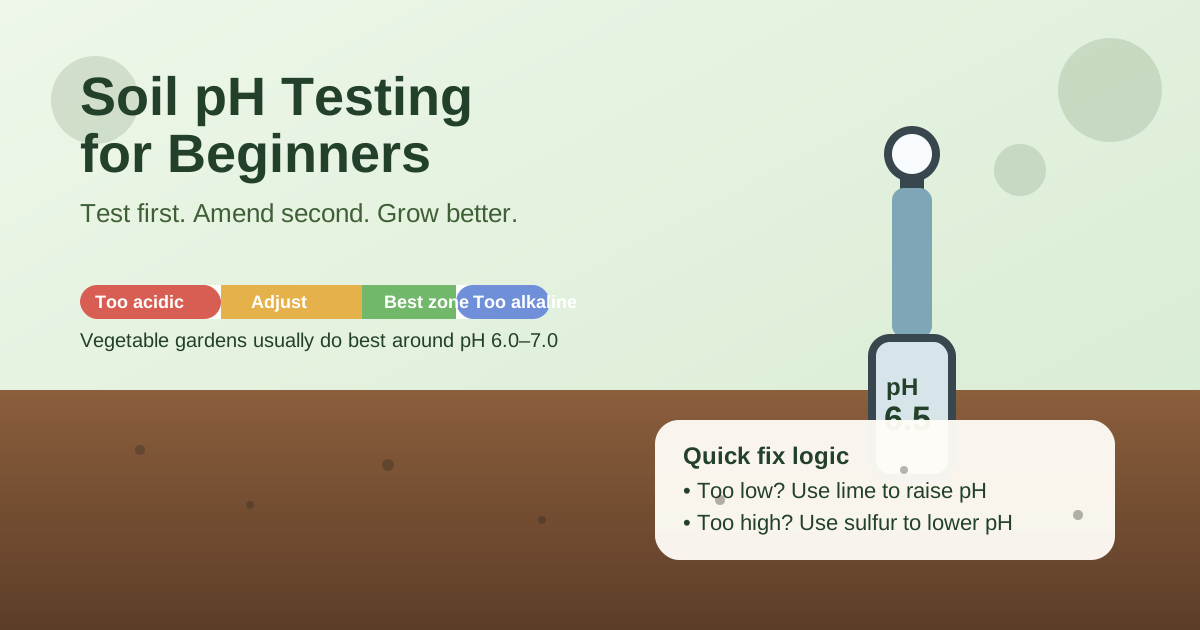
Soil pH Testing for Beginners: Get Garden Soil Right
Learn soil pH testing for beginners, including when to test, ideal vegetable-garden pH, and how to raise or lower pH without guessing.