Fertilizers & Soil
What's the Best Soil for Potted Plants?
Not all potting soil is equal, and using the wrong type can hurt your plants. Here's how to choose the right soil for the plants you're growing.

Not all potting soil is equal, and using the wrong type can hurt your plants. Here's how to choose the right soil for the plants you're growing.
Soil is the foundation of healthy plants — and it’s one of the most overlooked factors by beginners. Using the wrong soil can hold too much water and cause root rot, or drain so fast the plant is perpetually thirsty. Getting the soil right makes everything else easier.
Here’s what you actually need to know about soil for potted plants.
Garden Soil Doesn’t Belong in Pots
This trips up a lot of beginners. Garden soil — the stuff in your yard or bagged as “topsoil” — is designed for in-ground use. In a pot, it becomes dense and compacted, drains poorly, and suffocates roots. It can also harbor pests and diseases.
Always use a proper potting mix for containers.
What Makes Good Potting Soil
Good potting mix for most houseplants is:
- Light and fluffy — not dense or heavy
- Well-draining — water flows through; roots aren’t sitting in wet
- Rich in organic matter — provides nutrients and structure
High-quality potting mixes typically contain some combination of: peat moss or coco coir (moisture retention and aeration), perlite or vermiculite (drainage and aeration), and composted bark or organic matter (nutrition and structure).
Types of Potting Soil and When to Use Each
Standard Potting Mix
Works for: most tropical houseplants, pothos, philodendrons, peace lilies, ferns, spider plants
This is your all-purpose option. Brands like Miracle-Gro Potting Mix and Espoma Organic Potting Mix are widely available and reliable for most common houseplants. Avoid the cheapest bargain bags — they often contain poor-quality ingredients that compact quickly.
Cactus and Succulent Mix
Works for: cacti, succulents, aloe, agave, other drought-tolerant plants
These mixes are sandier and drain extremely fast. They’re essential for succulents and cacti, which are prone to root rot in moisture-retaining soil. You can also make your own by mixing standard potting soil 50/50 with coarse perlite or coarse sand.
Orchid Mix / Bark-Based Mix
Works for: orchids, bromeliads, some tropical epiphytes
Orchid mix is mostly chunky bark with little or no soil. This might look bizarre, but orchids in nature grow on tree bark — their roots need to dry out quickly and have excellent air circulation.
Seed Starting Mix
Works for: germinating seeds
Very fine, sterile, low-nutrient mix. Not intended for established plants — too light and low in nutrients. Only use for starting seeds, then transplant into regular potting mix.
Raised Bed / Garden Soil for Containers
Works for: outdoor container gardening, vegetable containers
A step between standard potting mix and garden soil. Better drainage than garden soil, but usually heavier than indoor potting mix. Designed for outdoor containers and raised beds.
Improving What You Have
If you have a standard potting mix that holds moisture too well for your plants (useful for succulents, for example), add perlite to improve drainage. A 50/50 mix of standard potting soil and perlite works well for most drought-tolerant plants.
If your mix drains too fast (fine for succulents, problematic for moisture-loving tropicals), add a bit of compost or coco coir to improve moisture retention.
Refreshing Old Potting Soil
Potting soil breaks down over time. Peat moss compresses, perlite rises to the surface, and nutrients deplete. After one to two growing seasons, the soil structure degrades.
When repotting, always use fresh potting mix. Don’t reuse old soil from a plant that died from root rot or disease — you risk spreading problems to healthy plants.
When to Repot vs. Just Amend
If your plant is growing fine but the soil looks depleted or compacted on top, you can top-dress with fresh potting mix and compost without repotting the whole plant. If the plant is clearly root-bound or the soil structure is poor, repot into fresh mix with a slightly larger container.
How Do I Test If My Potting Soil Drains Well Enough?
You can test a mix before you trust a plant to it. Punch drainage holes in a clean plastic cup, fill it loosely with the mix, leave an inch of headroom, and pour a cup of room-temperature water evenly over the surface. On a mix with enough air in it, the first drops appear within about fifteen seconds and the flow tails off over the next couple of minutes. If water sits on the surface for half a minute before it starts to move, or the cup is still draining five minutes later, the mix is too dense for a pot.
Fix it with coarse perlite or pumice, and fix it in increments you can actually read in the result — about one cup per gallon of mix, which is a change of roughly six percent by volume. A quarter cup per gallon is too small to change the timing, so you end up adding it four times and concluding the test does not work. Mix thoroughly and repeat the pour until the water moves.
What Actually Lowers Soil pH for Blueberries and Azaleas?
Most bagged potting mixes are limed by the manufacturer to sit near neutral, which is why blueberries, azaleas, camellias and gardenias sulk in them. Blueberries want roughly 4.5 to 5.5; the others are happier around 5.0 to 6.0.
The reliable container route is to build the acidity in, not to correct it later. Either buy a mix sold for ericaceous or acid-loving plants, or blend your own on a base of plain sphagnum peat moss, which is naturally acidic and, bought unlimed, does the work by itself: about half peat, a quarter pine bark fines, a quarter perlite.
Skip elemental sulfur in pots. It does not acidify anything on its own — soil bacteria have to oxidize it first, which needs warmth, moisture and air and takes weeks to months, so there is no way to time it against a potting day. In the small volume of a container it is also very easy to overshoot, and a mix driven too far down is harder to rescue than one that was never amended. Sulfur belongs in a garden bed, worked in a season ahead.
Test with an inexpensive kit after mixing, then again a few months later. Hard tap water is alkaline and slowly pushes a container back up; that drift is the usual reason a potted acid-lover looks fine its first year and pale its second.
What Is a Reliable Ratio for a Custom Houseplant Blend?
Three parts base, two parts aeration, one part organic matter is a structure that works across most foliage houseplants. The base is coco coir or peat moss. The aeration is coarse-grade perlite or pumice — grade matters more than brand, because fine perlite packs down and stops doing the job within a season. The last part is aged pine bark fines for slow-breaking structure, worm castings if you want a mild nutrient charge with it, or a mix of the two.
Dampen the perlite before you handle it. Dry perlite throws a fine dust you should not be breathing, and a light misting in the bag settles it completely.
Combine the dry ingredients first and turn the pile over several times, so you get a blend rather than layers. Then wet it in stages, folding between passes, until a squeezed handful holds its shape and breaks apart when you tap it. If water runs out of your fist, it is too wet to pot into — spread it out and let it back off.
How Does the Mix I Choose Change How Often I Water?
The mix sets the interval; the season decides when you check. Coir- and peat-heavy blends hold water and can go a week or more between waterings, while bark- or perlite-heavy mixes in the same pot and the same light may need it every few days. Neither is better — they suit different plants — but they are not interchangeable on the same watering habit.
So do not water on a calendar. Use the knuckle test: put a finger into the mix to the second joint. Dry at that depth, water thoroughly until it runs from the drainage holes. Cool or damp, leave it and check again in a couple of days.
The direction the seasons push this is the part people get backwards. In winter there is less light, growth slows and evaporation drops, so the same mix in the same pot stays wet much longer and the gap between waterings gets longer, not shorter. Active summer growth shortens it again. Nothing about the soil changed; the demand on it did.
If a pot is still wet a week after watering in the middle of winter, treat that as the mix telling you it holds too much water for that plant. The answer is more aeration at the next repot, not a smaller watering can.
How Should I Store Leftover Potting Mix?
Covered, not airtight. A lidded bin with a few holes drilled in it, or the original bag folded over and clipped inside a bin, keeps mice and stray weed seed out while still letting the mix breathe. Sealing a damp mix in an airtight bucket turns it anaerobic instead — it comes out smelling sour or ammoniac, and the aerobic microbes that make bark and castings worth having are the first thing lost. If a stored mix does smell sour when you open it, spread it out and let it air for a day before potting into it.
Keep it out of direct sun and away from heating vents, and off a bare concrete floor if you can raise it. Label the container with the date and what is in it, because a peat mix and a coir mix look identical in a bin and water nothing alike.
Old mix is usually still fine. What fades first is the wetting agent, so a mix that has dried hard in storage repels water and lets it channel straight down the side of the pot — pre-moisten it with warm water and knead it until it holds together before you use it. Any starter fertilizer charge will be spent too, so plan to feed the plant rather than trusting the bag.
One thing not to do: do not add lime to a stored mix to “correct pH drift”. Most bagged peat mixes are already limed, lime raises pH rather than lowering it, and it is the wrong direction entirely for the acid-lovers above. Test first, amend second.
Bottom Line
Match your soil to your plant’s needs:
- Tropical houseplants → quality standard potting mix
- Succulents and cacti → cactus mix or potting mix + perlite
- Orchids → orchid bark mix
- Seeds → seed starting mix
- Vegetables in containers → vegetable potting mix or raised bed soil
Use the right foundation and your plants will have a genuinely good start.
Our Top Soil Picks
FoxFarm Ocean Forest Potting Soil ~$20Our top pick for most houseplants. Rich, well-draining, and organic.
Check Price on Amazon →Affiliate link — we may earn a small commission at no cost to you.
Hoffman Organic Cactus & Succulent Soil Mix ~$10Fast-draining mix perfect for succulents and cacti. No amendments needed.
Check Price on Amazon →Affiliate link — we may earn a small commission at no cost to you.
Espoma Organic Perlite ~$15Mix into any potting soil to improve drainage. Essential for tropical plants.
Check Price on Amazon →Affiliate link — we may earn a small commission at no cost to you.
Keep reading
Related guides
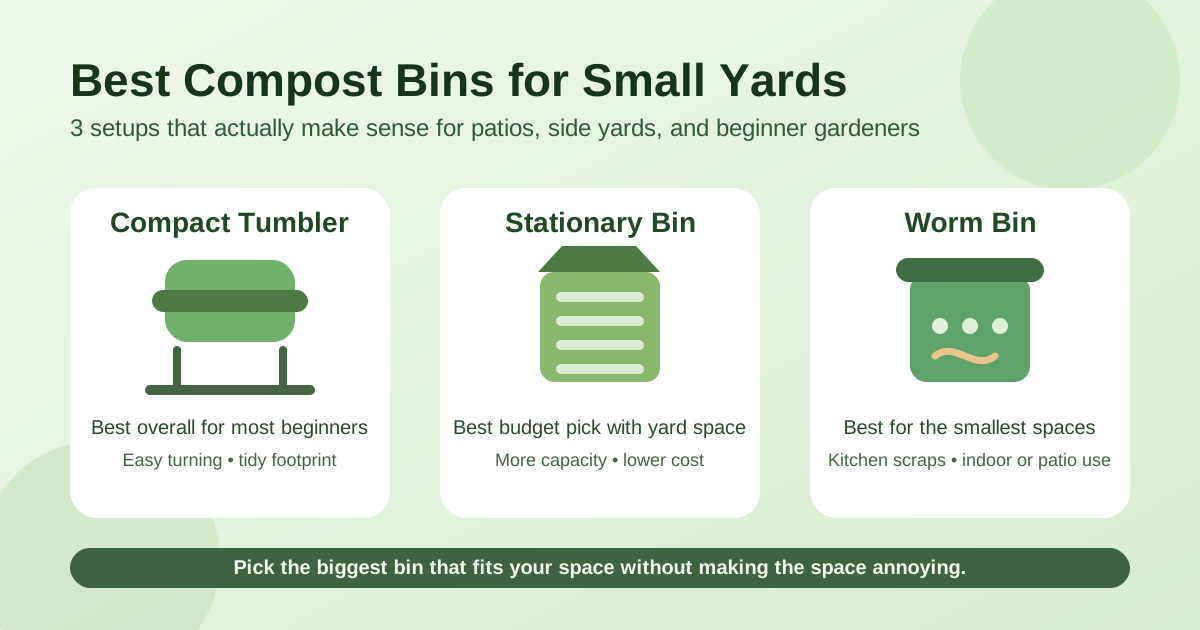
Best Compost Bins for Small Yards and Patios
The best compost bins for small yards and patios make kitchen scraps and yard waste manageable without smells, pests, or a giant footprint.
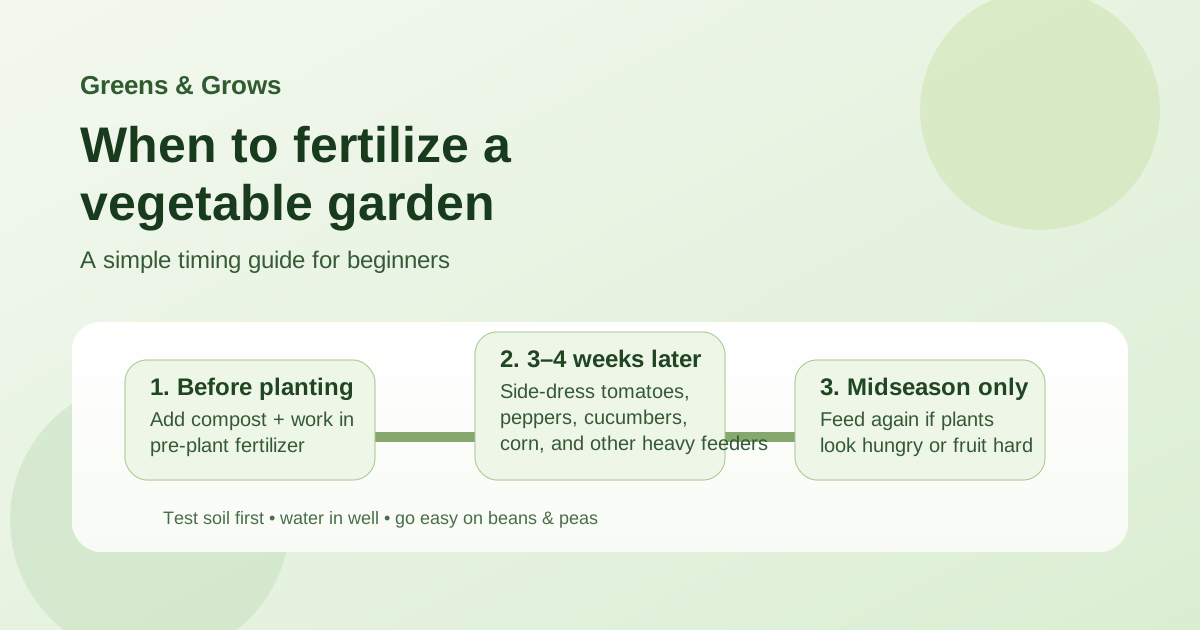
When to Fertilize a Vegetable Garden: Spring Timing Guide
Learn when to fertilize a vegetable garden in spring, after planting, and midseason so you feed vegetables at the right time without overdoing it.
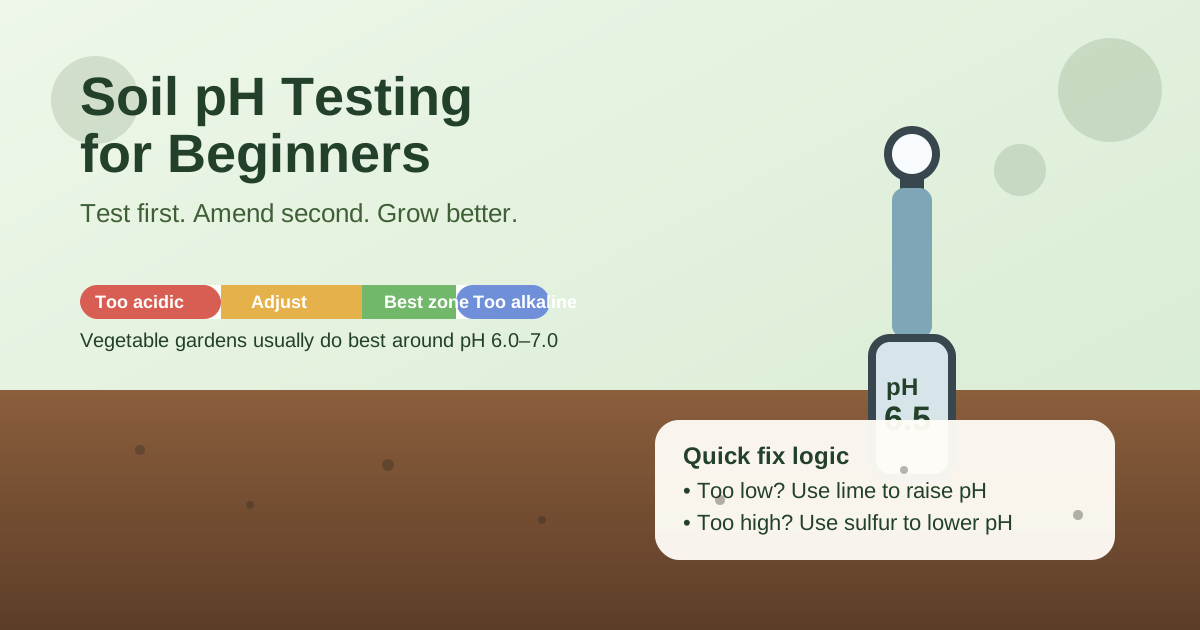
Soil pH Testing for Beginners: Get Garden Soil Right
Learn soil pH testing for beginners, including when to test, ideal vegetable-garden pH, and how to raise or lower pH without guessing.