Fertilizers & Soil
What Is NPK Fertilizer? A Simple Explanation
Every fertilizer package shows three numbers. Here's what NPK means, what each nutrient does, and how to pick the right ratio for your plants.

Every fertilizer package shows three numbers. Here's what NPK means, what each nutrient does, and how to pick the right ratio for your plants.
Every bag or bottle of fertilizer shows three numbers on the label - something like 10-10-10 or 5-10-5 or 3-1-2. These numbers refer to NPK: nitrogen, phosphorus, and potassium. They tell you what’s in the fertilizer and in what proportions.
Understanding NPK doesn’t require a chemistry degree. Here’s the plain-English version.
What the Numbers Mean
The three numbers represent the percentage by weight of each nutrient in the fertilizer:
- First number: Nitrogen (N)
- Second number: Phosphorus (P)
- Third number: Potassium (K)
So a fertilizer labeled 10-10-10 contains 10% nitrogen, 10% phosphorus, and 10% potassium by weight. The remaining 70% is filler or other ingredients. A 20-20-20 fertilizer is the same ratio but twice as concentrated.
These are the three “macronutrients” - the big three that plants need in the largest quantities. Healthy plants also need secondary macronutrients (calcium, magnesium, sulfur) and trace micronutrients (iron, manganese, zinc, and others), but NPK is the foundation.
What Each Nutrient Does
Nitrogen (N) - The Growth Nutrient
Nitrogen drives leafy, vegetative growth. It’s a core component of chlorophyll (what makes plants green) and amino acids (the building blocks of plant proteins). When a plant has plenty of nitrogen, it grows vigorously and stays deep green.
Signs of nitrogen deficiency: Yellowing starting from the oldest (lowest) leaves and working upward. Slow growth. Pale, washed-out color overall.
Signs of nitrogen excess: Overly lush, dark green, soft growth. Lots of leaves but few flowers or fruit. Increased susceptibility to pests and disease.
Use higher N fertilizer for: Lawn, leafy vegetables (lettuce, spinach), foliage houseplants, herbs.
Phosphorus (P) - The Root and Flower Nutrient
Phosphorus supports root development, flowering, and fruit production. It’s also important for energy transfer within the plant (it’s part of ATP, the plant’s energy currency). Phosphorus is especially critical for seedlings establishing roots and for plants transitioning from vegetative growth to flowering.
Signs of phosphorus deficiency: Purple or reddish coloring on leaf undersides. Slow root development. Poor flowering or fruiting.
Signs of phosphorus excess: Rare in outdoor gardens but can cause micronutrient deficiencies (particularly zinc, iron) because high phosphorus interferes with their uptake.
Use higher P fertilizer for: Flowering plants, bulbs, tomatoes and peppers when fruiting, root vegetables, transplants getting established.
Potassium (K) - The All-Around Health Nutrient
Potassium is sometimes called the “regulator” nutrient. It doesn’t directly build plant tissue the way N and P do, but it’s involved in dozens of enzyme processes. It improves drought tolerance, disease resistance, cold hardiness, fruit quality, and overall plant vigor.
Signs of potassium deficiency: Brown, scorched leaf margins (edges), particularly on older leaves. Weak stems. Poor fruit development.
Signs of potassium excess: Less common, but can interfere with magnesium and calcium uptake at very high levels.
Use higher K fertilizer for: Fruiting plants (tomatoes, peppers, cucumbers), plants under stress, winterizing perennials.
Choosing the Right NPK Ratio
Balanced (equal NPK) - e.g., 10-10-10, 20-20-20: A good all-purpose choice for most houseplants and general-purpose vegetable garden feeding. Safe and versatile.
High nitrogen - e.g., 30-10-10: Lawns, leafy greens, foliage houseplants needing growth boost. Avoid for flowering/fruiting plants when they’re in those stages.
High phosphorus - e.g., 5-10-5: Transplants, bulb planting, flowering annuals, tomatoes during fruiting.
High potassium - e.g., 0-0-60: Potash alone, used to supplement when potassium is deficient. Also used in “bloom booster” fertilizers.
Miracle-Gro and NPK
Miracle-Gro Indoor Plant Food uses a 1-1-1 ratio (balanced). Their All Purpose Plant Food is 24-8-16 - higher nitrogen and potassium, designed to push overall plant growth. Their Bloom Booster is 10-52-10 - high phosphorus to support flowering. Different products for different stages and purposes.
Organic vs. Synthetic NPK
Organic fertilizers (compost, fish emulsion, bone meal, kelp) release nutrients slowly as they’re broken down by soil microbes. NPK numbers are typically lower but the effect lasts longer and improves soil biology.
Synthetic fertilizers deliver nutrients directly and quickly. NPK numbers are higher and more precisely calibrated. Results are faster but there’s no soil-building benefit.
Most gardeners use a mix of both: organic matter to build long-term soil health, and synthetic or concentrated organic fertilizers for quick supplemental feeding.
How Do I Apply NPK Without Burning My Plants?
Fertilizer burn is almost always a concentration problem, not a dose problem. Label rates on liquid feeds are written for vigorous outdoor growth, so for houseplants and seedlings, half the label strength is the sensible default — many indoor growers simply stay there permanently and feed a little more often rather than working up to full strength.
The single most useful habit: never feed a bone-dry pot. Water with plain water first and let it drain, then fertilize. Dry soil concentrates the fertilizer solution against roots that are already water-stressed, and a soil solution saltier than the root’s own sap pulls water out of the root instead of into it. That is the burn — scorched leaf margins and crispy tips a few days later.
Granular fertilizer outdoors follows the same logic. Keep the granules off stems and leaves, spread them in a band or a ring out toward the drip line where the feeder roots actually are rather than piled against the crown, and water them in so they dissolve and move into the soil instead of sitting as a concentrated crust.
Potted plants fed year-round accumulate salts no matter how careful you are; a white crust on the soil surface or around the pot rim is the visible version. Flush the pot with roughly twice its volume of plain water every few months, letting all of it drain away rather than sit in a saucer.
Does Soil pH Change How NPK Works?
Nutrients being present is not the same as nutrients being available, and pH is what decides which. Most garden plants do best between 6.0 and 7.0.
Below about 5.5, phosphorus binds tightly to aluminum and iron and stops being available no matter how much you apply. Above about 7.5, phosphorus locks up with calcium instead, and iron, manganese and zinc become hard to take up — which is why an alkaline garden can show yellowing between the veins of the newest leaves while the bag says nothing is missing. Note the contrast with the nitrogen deficiency described above: nitrogen yellows the oldest leaves first, iron the youngest.
Test rather than guess — most county extension services run a real soil test cheaply, and it tells you both your starting pH and your soil texture. Both matter, because lime and elemental sulfur rates depend heavily on texture: a sandy soil needs a fraction of what a clay soil does to move the same amount. Both also work slowly. Lime takes months to react through the root zone, and elemental sulfur takes several months to a full season, because soil bacteria have to oxidize it first and they are sluggish in cool soil.
One real interaction worth spacing out: do not broadcast lime at the same time as an ammonium-based nitrogen fertilizer. Raising the pH converts ammonium to ammonia gas, and the nitrogen you just paid for leaves as a smell. A few weeks between the two applications avoids it.
How Do I Blend Fertilizers to Get a Custom NPK Ratio?
Because the three numbers are percentages by weight, blending is just arithmetic. Mix 3 pounds of a balanced 10-10-10 with 1 pound of a 34-0-0 nitrogen product and you have 4 pounds containing 0.64 pounds of nitrogen and 0.30 pounds each of phosphorus and potassium — roughly a 16-7.5-7.5, shifted toward growth without abandoning the other two.
Do the math by weight and, if the ratio actually matters to you, measure by weight too. Scoops and cups are an approximation: prilled urea and a dense granular blend do not weigh the same per cup, so volume measuring quietly changes the ratio you calculated.
Organic single-nutrient ingredients complicate the arithmetic in a different way, because they release on their own clock. Blood meal (around 12-0-0) is fast by organic standards; bone meal and rock phosphate are slow, and rock phosphate’s phosphorus stays largely locked up above roughly pH 6 — so blending it to hit a target ratio can give you a number that exists on paper and never reaches the plant this season. Use soluble products when the ratio needs to mean something now, and the slow ones to build soil over years.
Store the blend dry, sealed, and labeled with the ratio and the date. Nitrogen products, urea especially, pull moisture out of humid air and cake into chunks that clog a spreader and lay down uneven stripes — and a bucket of unlabeled gray granules six months on is a guess, not a fertilizer.
When Should I Stop Feeding Plants With NPK?
Outdoors, stop high-nitrogen feeding of perennials, shrubs and trees roughly six to eight weeks before your average first frost. Count back from your own frost date rather than picking a month — that lands in September in a cold zone and in November in a mild one. The reason is specific: nitrogen pushes soft new growth that has no time to harden off, and that growth is what winter kills back.
Resist the common next step of switching to a high-phosphorus “fall” feed. Phosphorus barely moves in most soils and established gardens usually have plenty already; adding more on the theory that it toughens plants is exactly how you get the excess-phosphorus micronutrient lockout described earlier, and the surplus runs off into waterways. Potassium’s contribution to cold hardiness is real, but real means it helps when the soil is genuinely short of it — a soil test tells you that, a bag label does not.
Houseplants run on a different trigger: light, not frost. Shorter winter days slow growth, demand drops, and feeding at summer rates into a dark room mostly builds up salt. Cut to about half through late fall and winter, or stop entirely for plants that visibly pause, and start again when new growth appears in spring. Plants under grow lights on a long daily timer keep growing and keep eating on the summer schedule.
The Practical Takeaway
You don’t need to memorize NPK chemistry. The practical rule:
- Mostly leaves? Go balanced or higher N.
- Wants flowers or fruit? Go balanced to higher P.
- Under stress or general health? Ensure adequate K.
- Don’t know? Start with a balanced fertilizer. It’s hard to go wrong.
Related Reads
- Best Fertilizer for Houseplants — applying NPK knowledge to indoor plant feeding: specific products and schedules
- How to Make Compost at Home — free fertilizer from kitchen scraps; how compost fits alongside NPK feeds
- Homemade Fertilizer Recipes — DIY fertilizer options that complement what you’ve learned about plant nutrients
Keep reading
Related guides
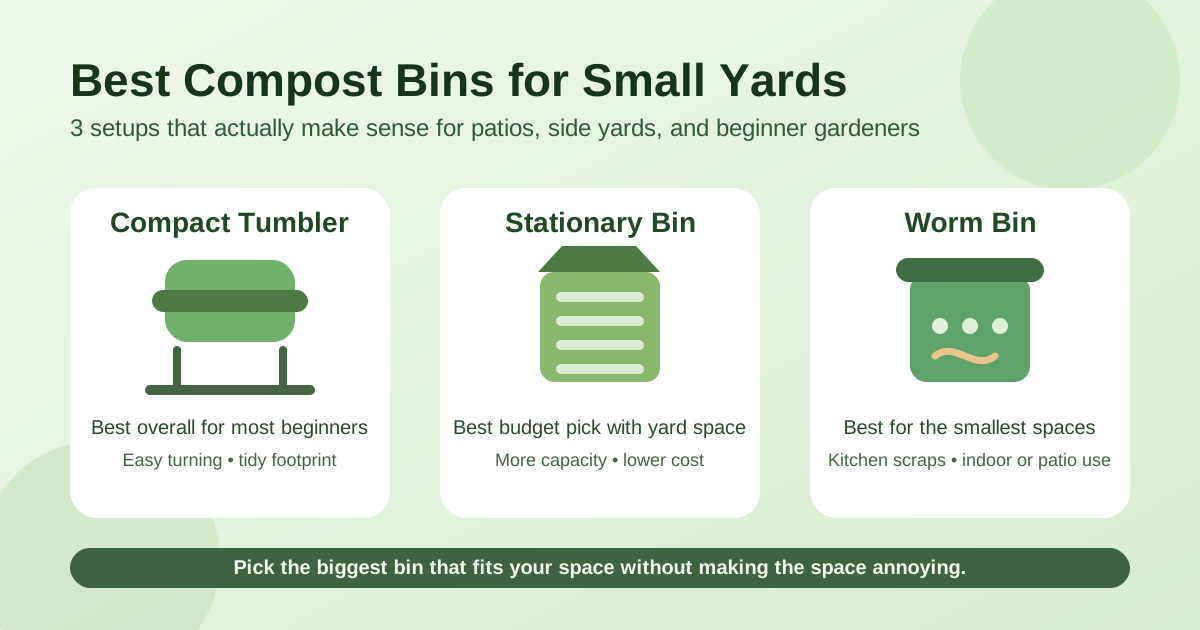
Best Compost Bins for Small Yards and Patios
The best compost bins for small yards and patios make kitchen scraps and yard waste manageable without smells, pests, or a giant footprint.
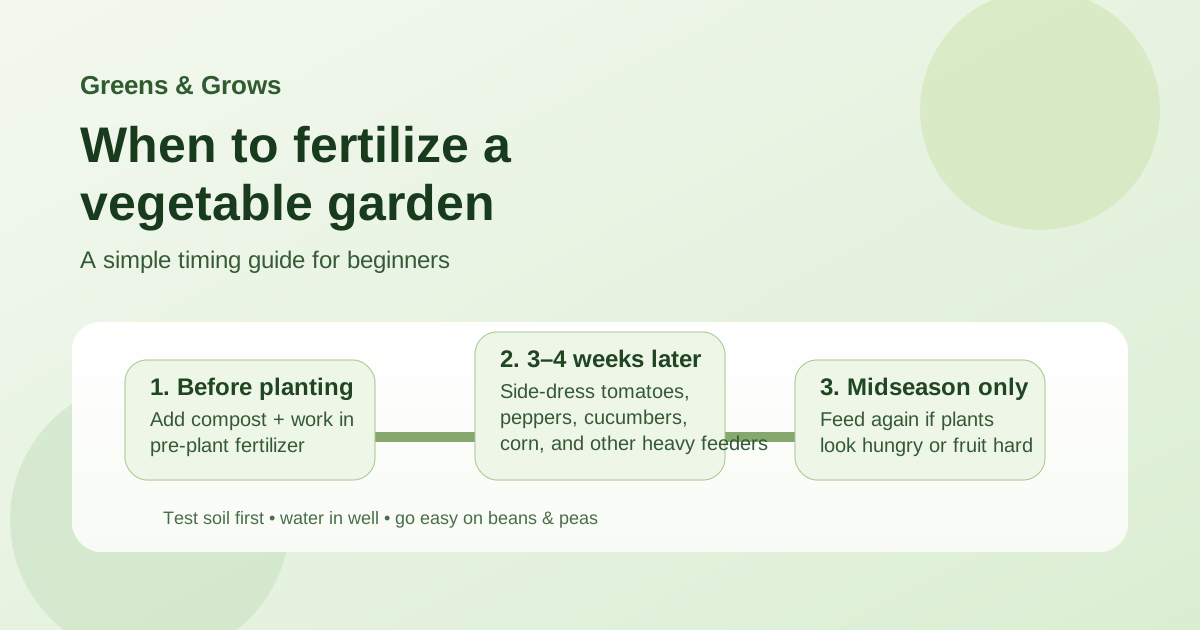
When to Fertilize a Vegetable Garden: Spring Timing Guide
Learn when to fertilize a vegetable garden in spring, after planting, and midseason so you feed vegetables at the right time without overdoing it.
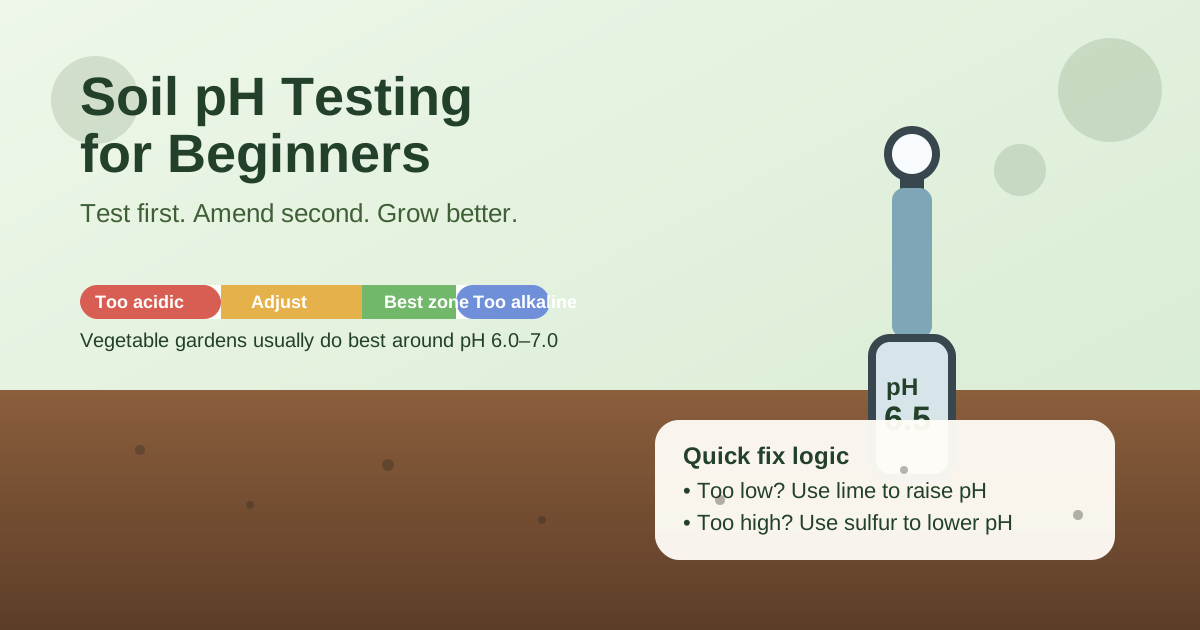
Soil pH Testing for Beginners: Get Garden Soil Right
Learn soil pH testing for beginners, including when to test, ideal vegetable-garden pH, and how to raise or lower pH without guessing.